ELEMENTS OF J&J DEVELOPMENT PROCESS
J&J Design unites concept, naval architecture, engineering, production, and branding in a single, integrated process. Every stage is optimised for performance, efficiency, and sustainability, delivering innovative, market-ready solutions in close partnership with boatbuilders.
01/
Preliminary
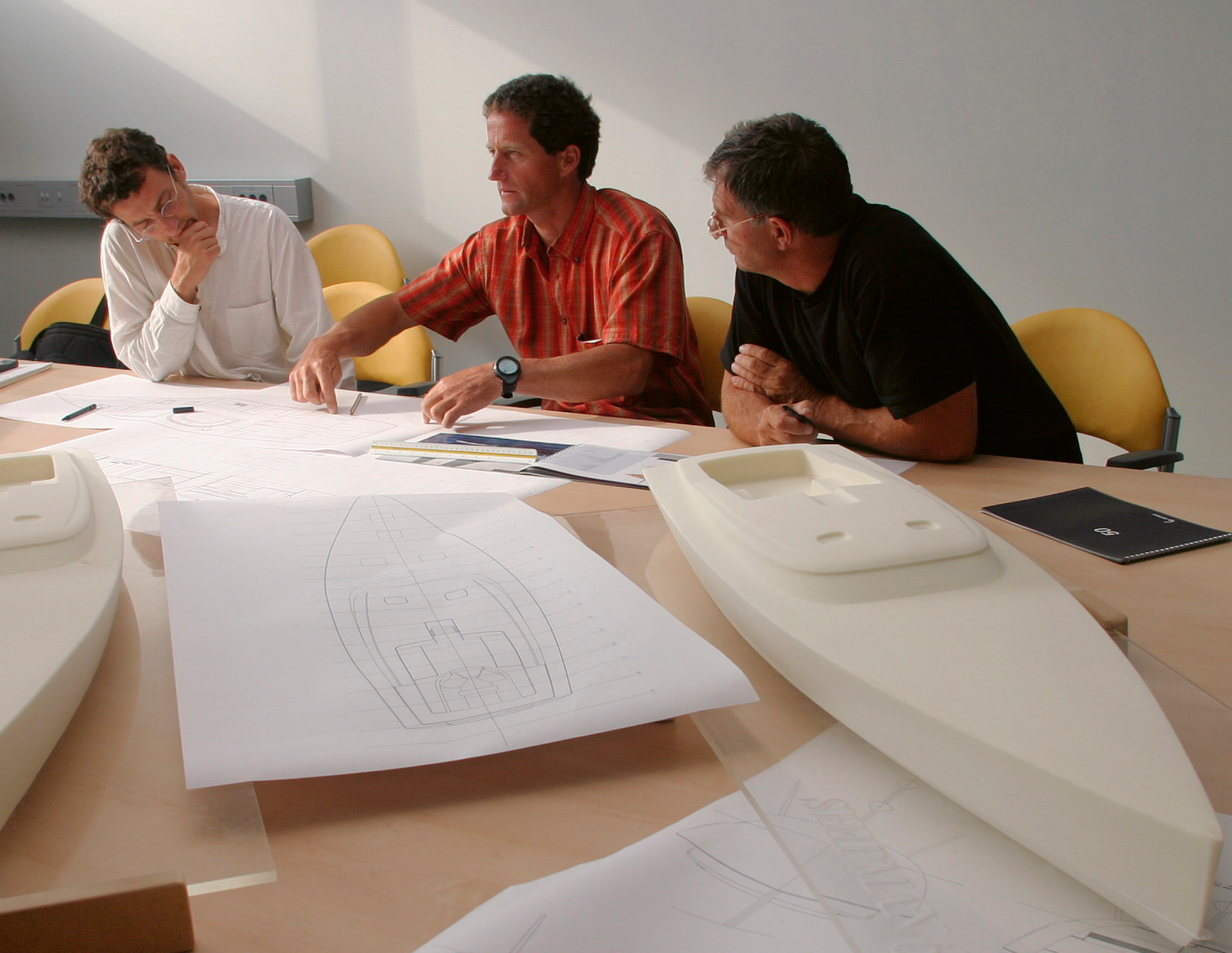
It is very important that the yard and J&J have a good understanding of the yard's qualities and challenges in the current and future markets. In many cases J&J's neutral and objective view — having intimately worked with 70 yards worldwide — enables to evaluate and directly compare all relevant areas: the products, sales, marketing, branding, production infrastructure, technology, skills and purchasing, including management aspects. Such a benchmark preliminary study gives a good and objective insight into the boatbuilding company within the boating industry and is often requested by the owners.
02/
Concept
Contains the definition or redefinition of the range where the new model is positioned — or of the new range if a new range is created. The mission, idea and statement of the new product or range. Financial and business aspects. Short definition of the new model and its role within the builder's portfolio.
03/
Design Brief
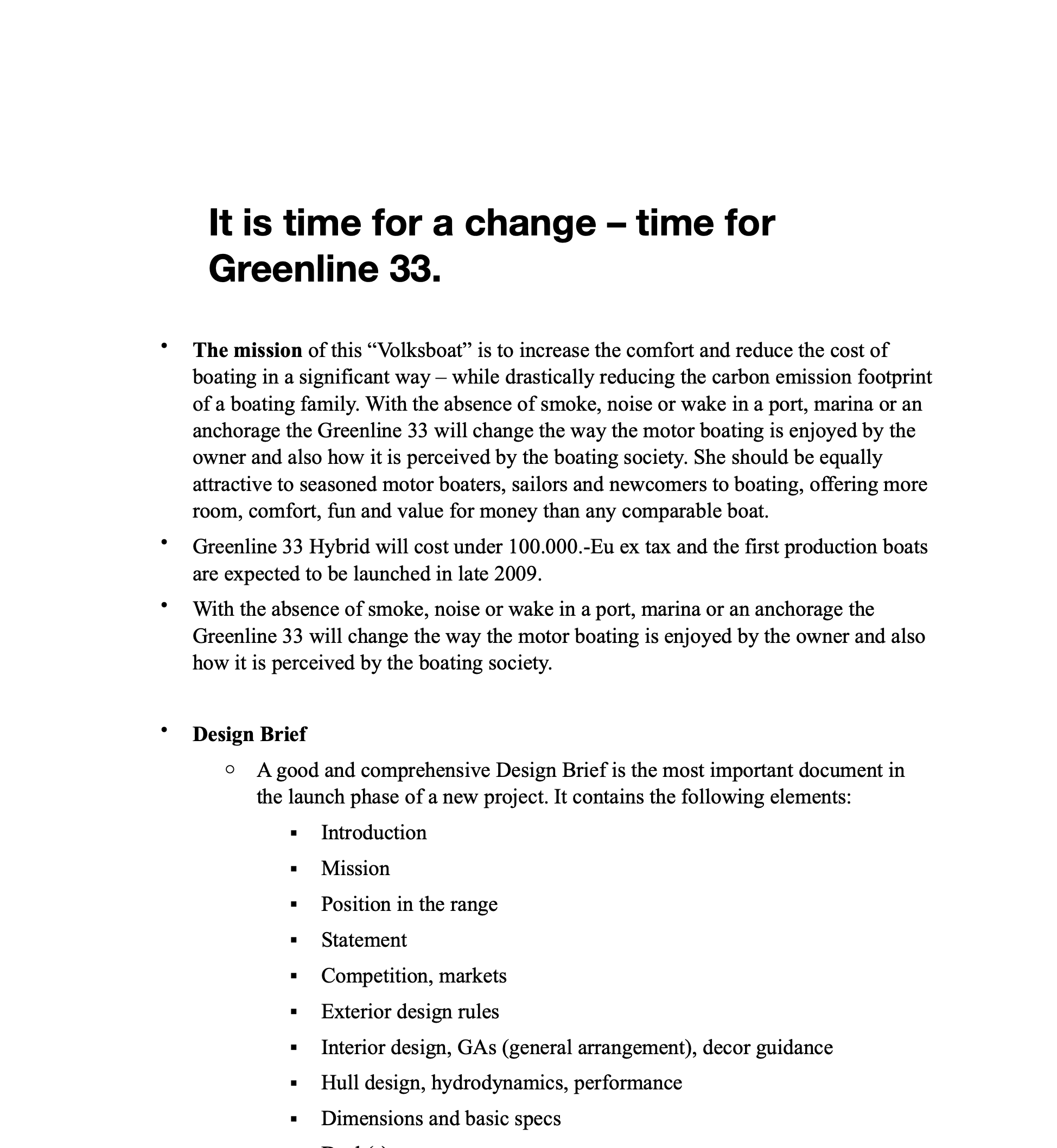
A good and comprehensive design brief is the most important document in the launch phase of a new project. It contains: Introduction · Mission · Position in the range · Statement · Competition and markets · Exterior design rules · Interior design and general arrangements · Hull design and hydrodynamics · Dimensions and basic specs · Deck concepts · Hull and deck gear · Propulsion and steering · Tanks · Systems · Interior and woodwork · Hydraulics · HVAC · Competitors table · Pricing · Preliminary BOM and cost structure · Capex and ROI · Production considerations · Marketing · Timing.
-
Introduction ·
Mission
Position in the range
Statement
Competition and markets
Exterior design rules
Interior design and general arrangements
Hull design and hydrodynamics
Dimensions and basic specs
Deck concepts
Hull and deck gear
Propulsion and steering
Tanks
Systems
Interior and woodwork
Hydraulics · HVAC ·
Competitors table ·
Pricing
Preliminary BOM and cost structure
Capex and ROI
Production considerations
Marketing
Timing
04/
Naval Architecture
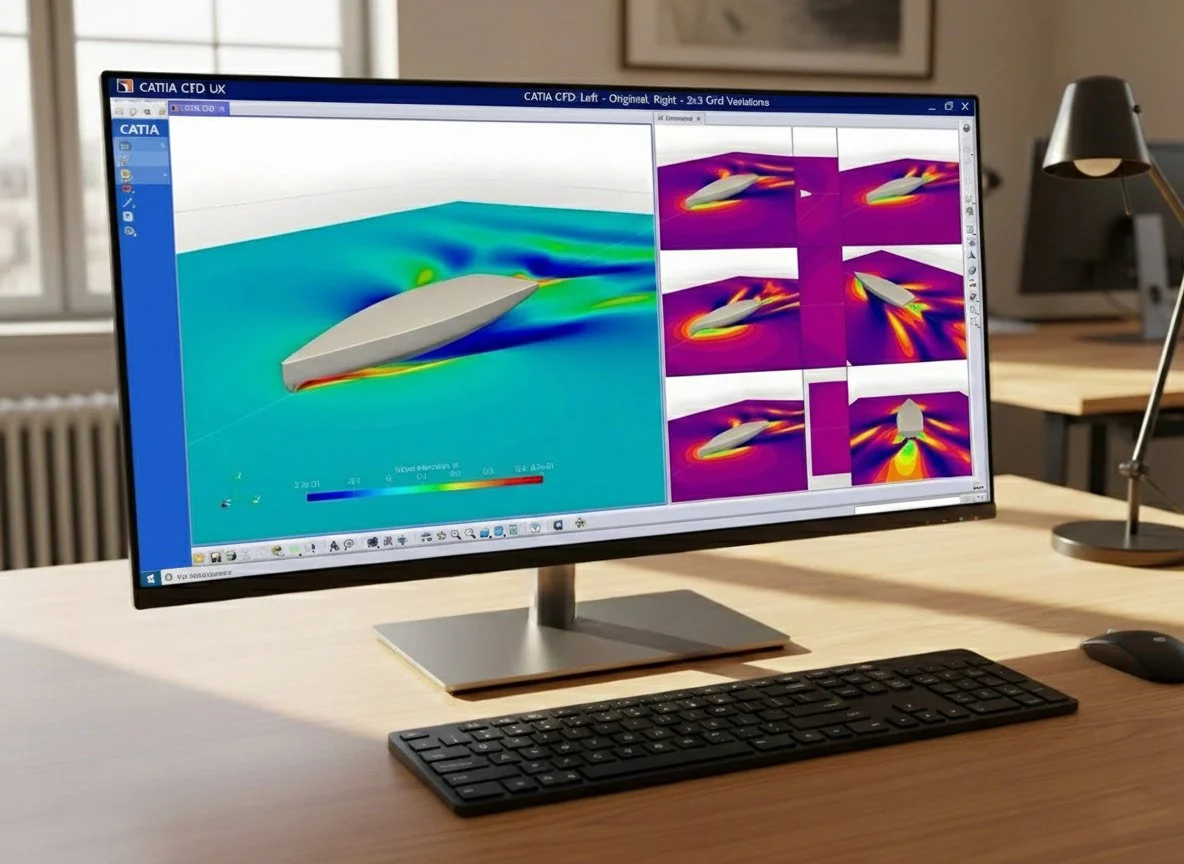
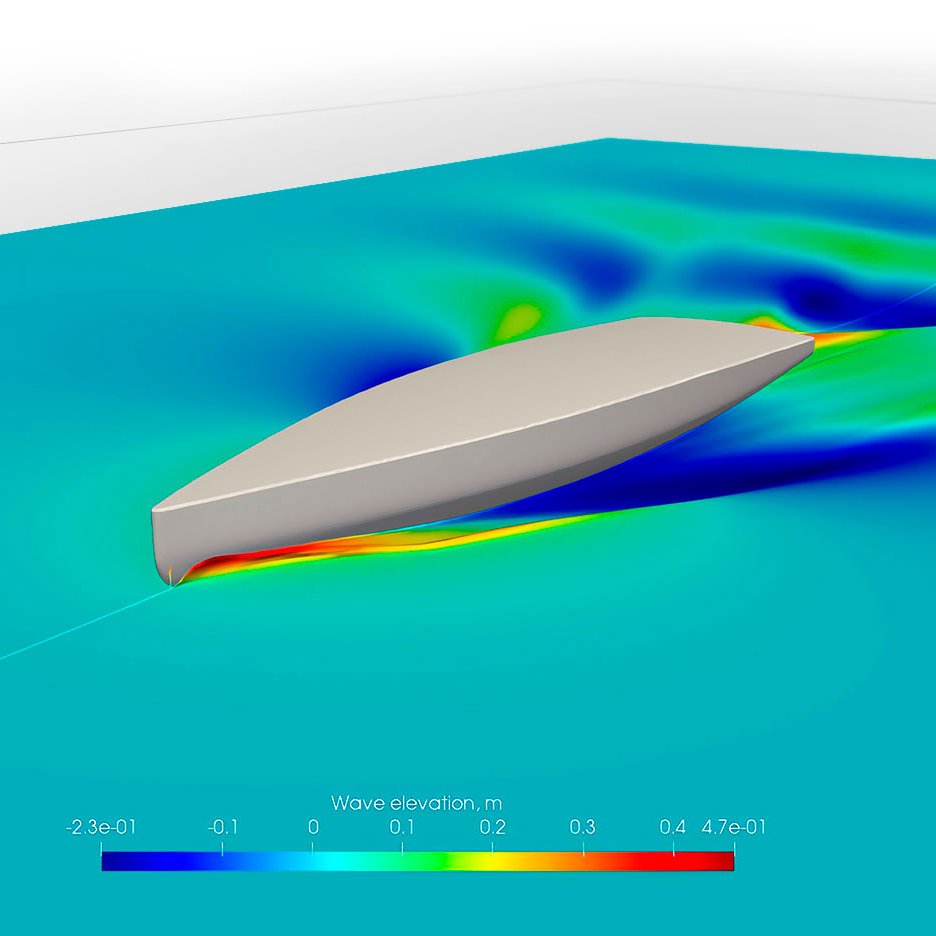
The art of a hull design which is safe, stable, easily manoeuvrable, efficient and beautiful is based on correct knowledge and interpretation of scientific data - and experience. More than 75000 boats and yachts based on projects coming from our office give us good understanding of this area. The right 3D geometry of all naval architecture elements is based on CFD studies and/or tank testing data, and on sea-keeping and stability studies. To establish valid prediction of speeds and behaviour a good understanding of the true production weights and options-dependent load case are primordial.
05/
Exterior Design
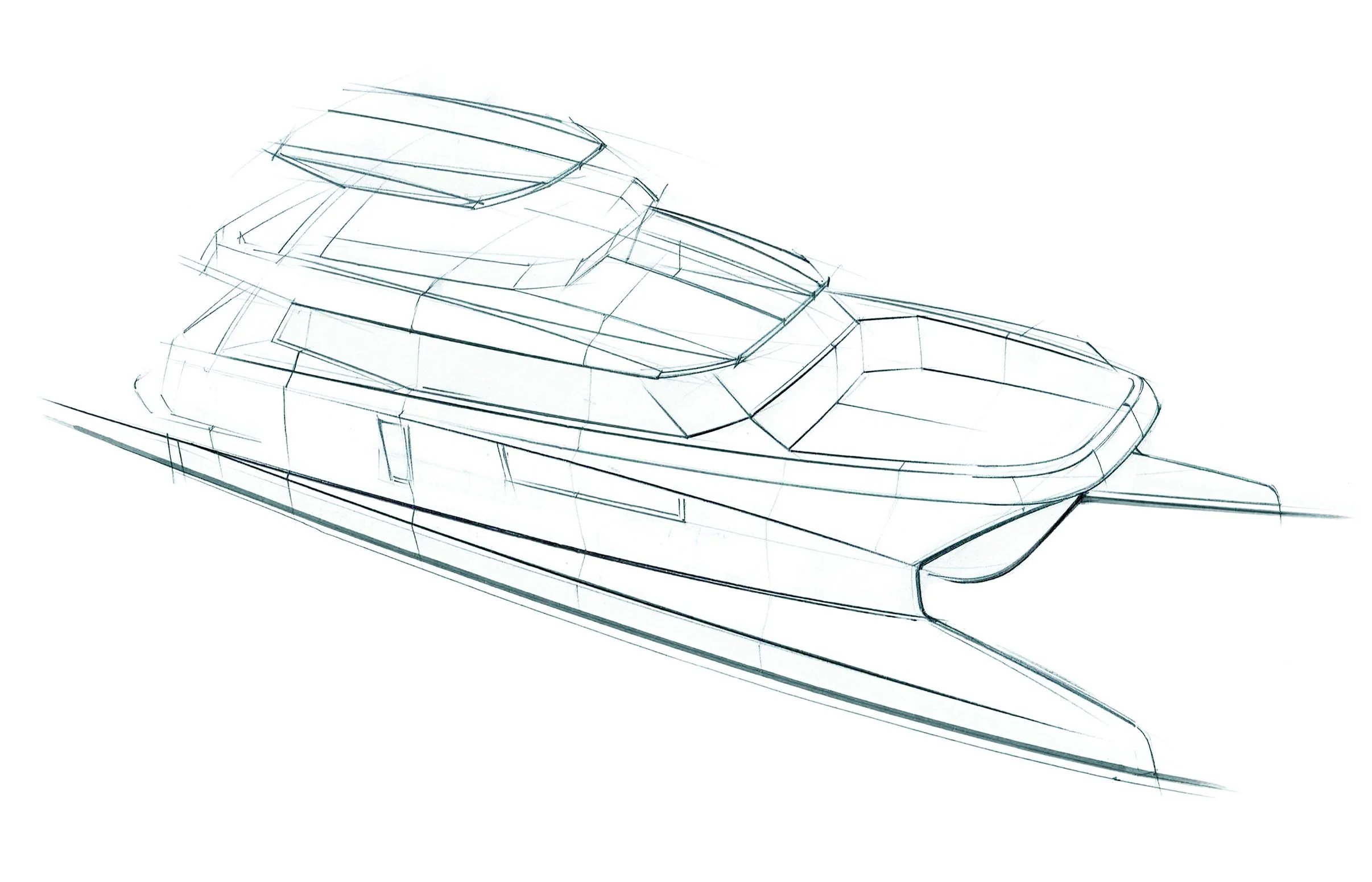
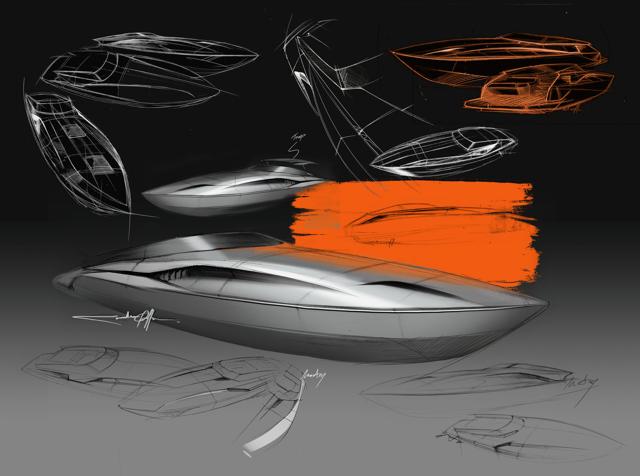
Conceptual exterior design sketches are typically based on a so called “technical package” to avoid later conflicts with axiomatic conceptual and engineering needs. Then these rough sketches are developed into “aeristic impression” drawings and preliminary 3D models which serve to develop Virtual Reality and scale physical models which allow good evaluation of the work. Later final 3D models and realistic renders are developed, and as needed modified to develop marketing and sales materials.
06/
Interior Design and Styling
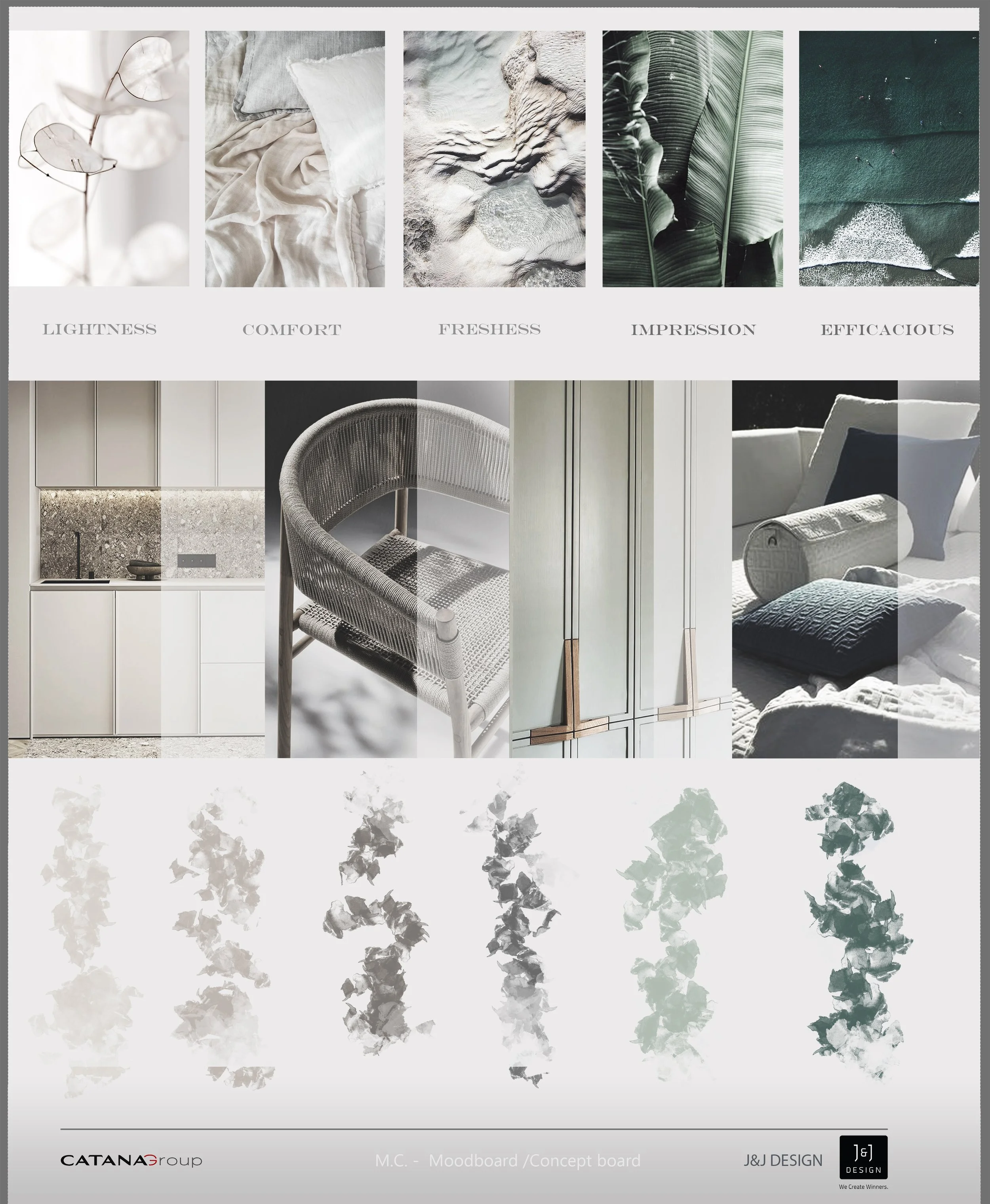
Based on preliminary general arrangement drawings and sketches the rules of inner design and decor are developed. Materials proposed are chosen, and drawings of typical details, along with a mood board. VR and scale 1 mock-ups are developed as needed. 3D preliminary model is developed to enable the start of the engineering phase. Final 3D models and realistic renders are developed, and as needed modified to develop marketing and sales materials
07/
Engineering
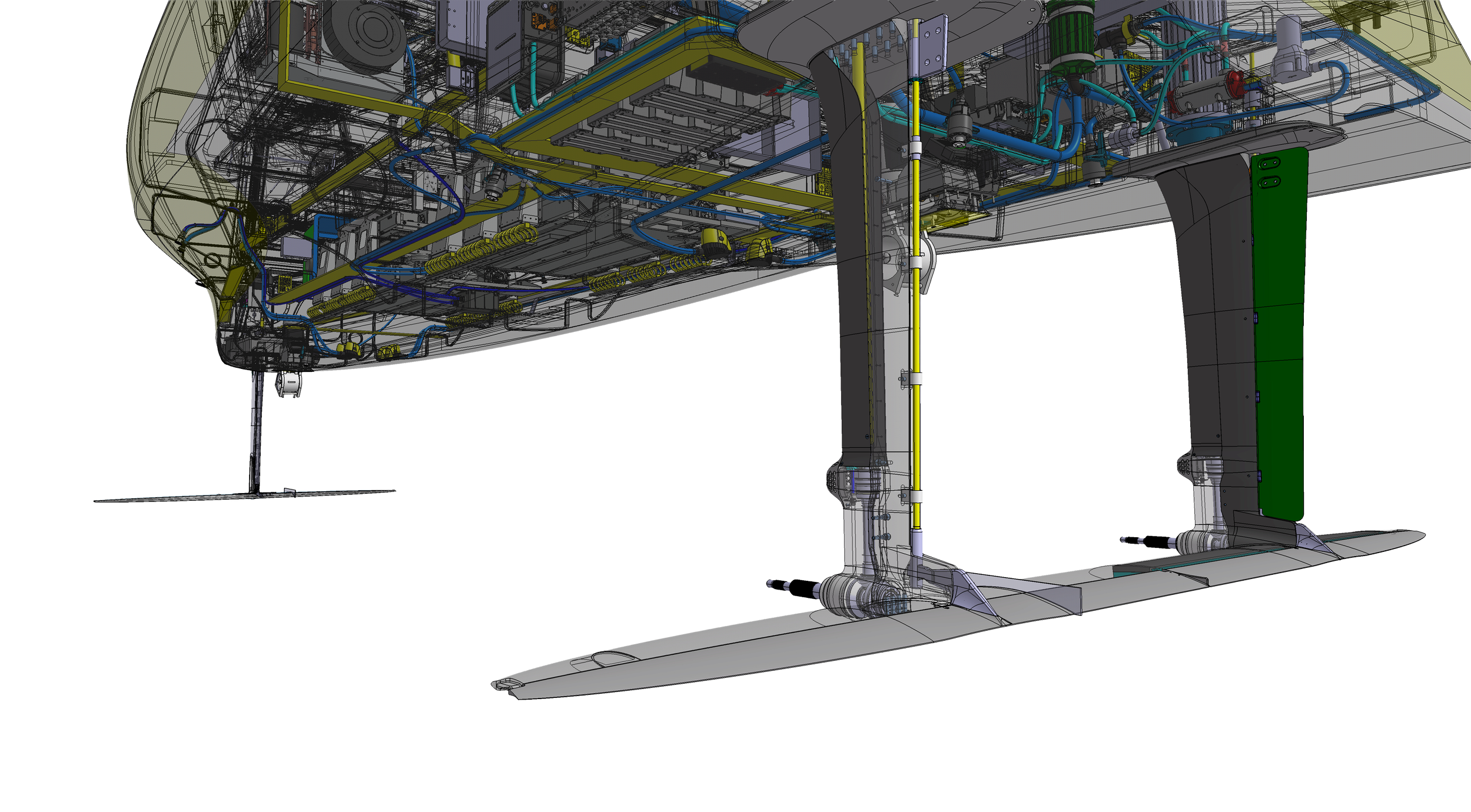
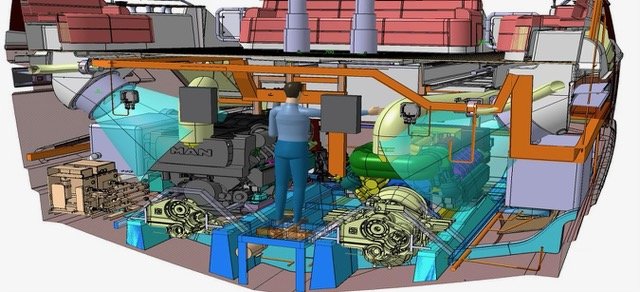
Final naval architecture and design drawings, based on the "technical package," support the engineering phase. They provide geometric and technical details of all boat parts and yield a final 3D solid model, typically using Dassault Catia or Siemens NX. Key areas include composite parts (GRP) with final 3D milling files and scantling drawings detailing structural and non-structural components and their calculations. Systems cover propulsion, fuel, steering, electrical, electronics, woodwork, interior appliances, hull/deck gear, hydraulics, water systems, HVAC, safety, and more. The interior design includes engineering for woodwork, upholstery, canvas, curtains, hardware, and related items.
08/
Build Process
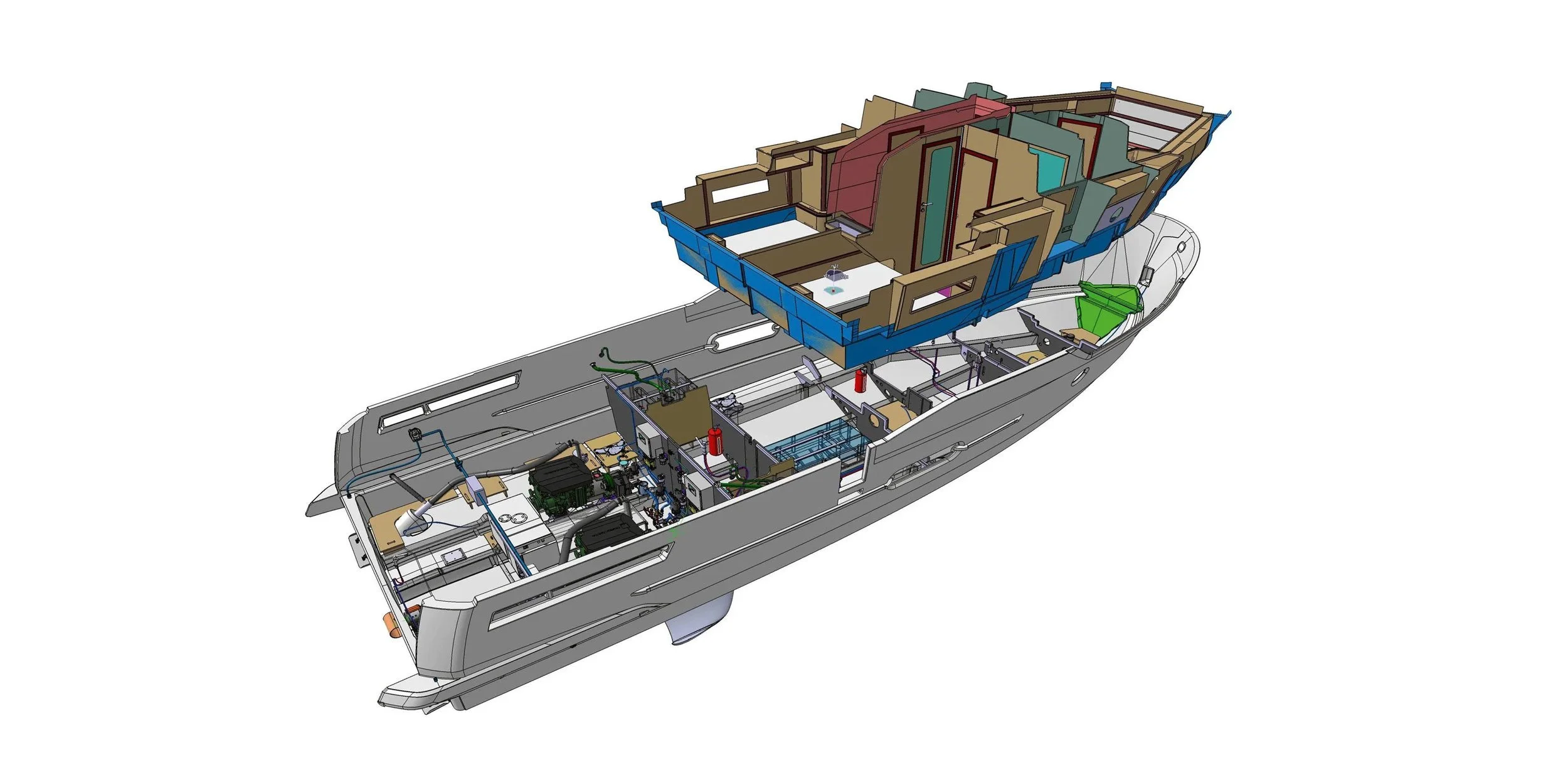
Build process must be defined early, because these decisions affect the design, engineering and tooling areas. Will the boat be completely built in-house or will some components be outsourced? The composite and assembly production processes are engineered and the production flows designed. How will the components move inside the factory? Definition of tools and jigs needed, processes, technologies, skills. Value stream analysis. Process times, tact-time, expected volumes, limitations. Definition of ramp-up.
09/
Tooling
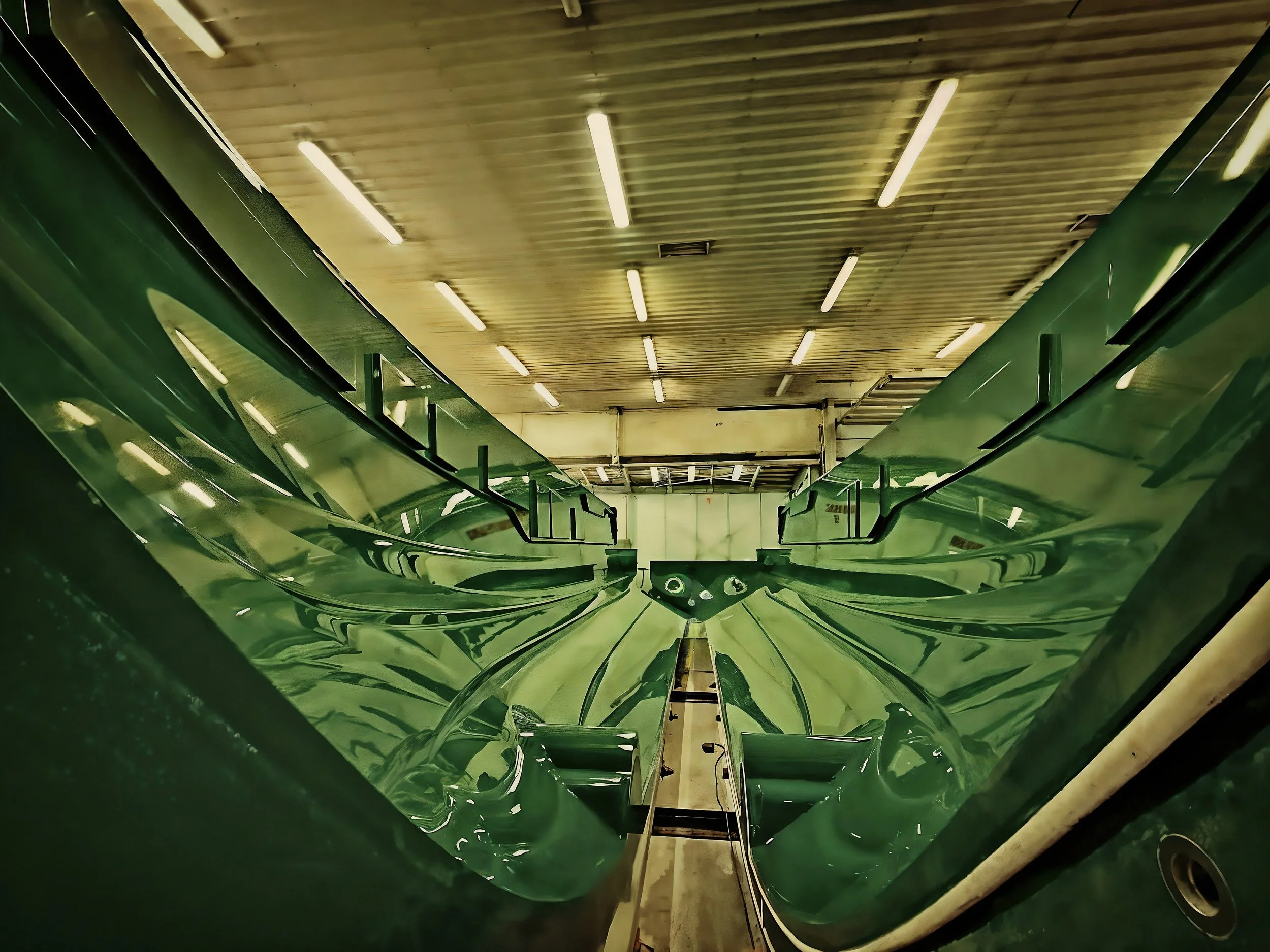
Which composite (GRP) technology will be used? Are the ways the GRP production is in need of modification for this project — injection, infusion, RTM, hand lay-up, post-curing in ovens — and is new equipment, investment or training needed? Tooling is adapted to tact time and manipulation of moulds. Once these questions are clear, proper custom-designed tooling definition can be made with definitions of gel coat type, resin and glass structure, reinforcements in steel or other material, and mechanical or hydraulic open/close mechanisms.
10/
Prototyping/Pre-series
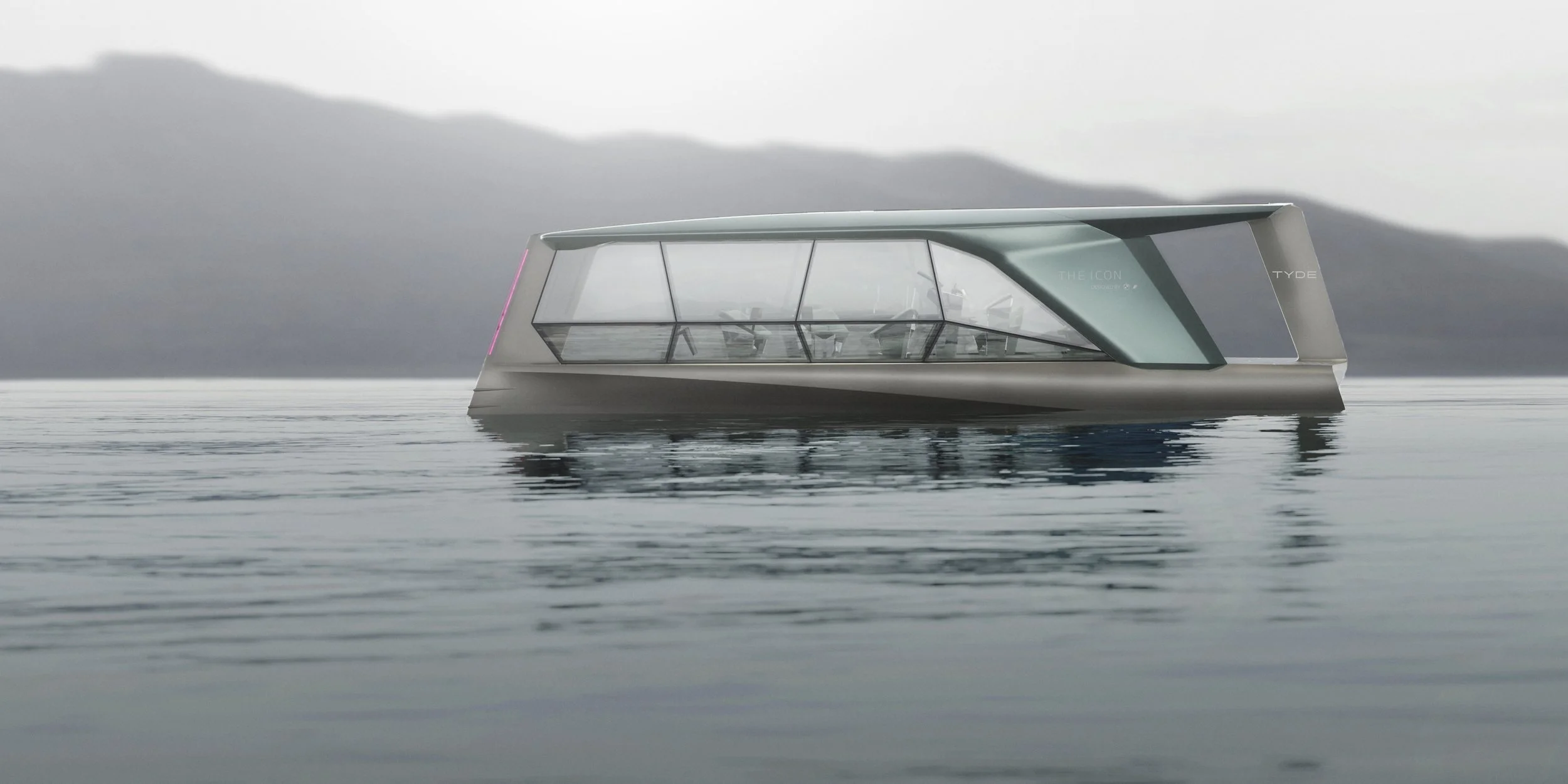
In some cases it is desired that the prototype composite parts are manufactured and, if needed, prototype boat 1 is built. This enables understanding, defining and finalising the details of the production and build process, along with building the necessary tools and templates which can only be defined at building boat 1. This build outside the production area is very instrumental in defining how the production run will operate. Sometimes a pre-series of 2 to 5 boats is planned to optimise the smooth production run of the high-volume series.
11/
Testing
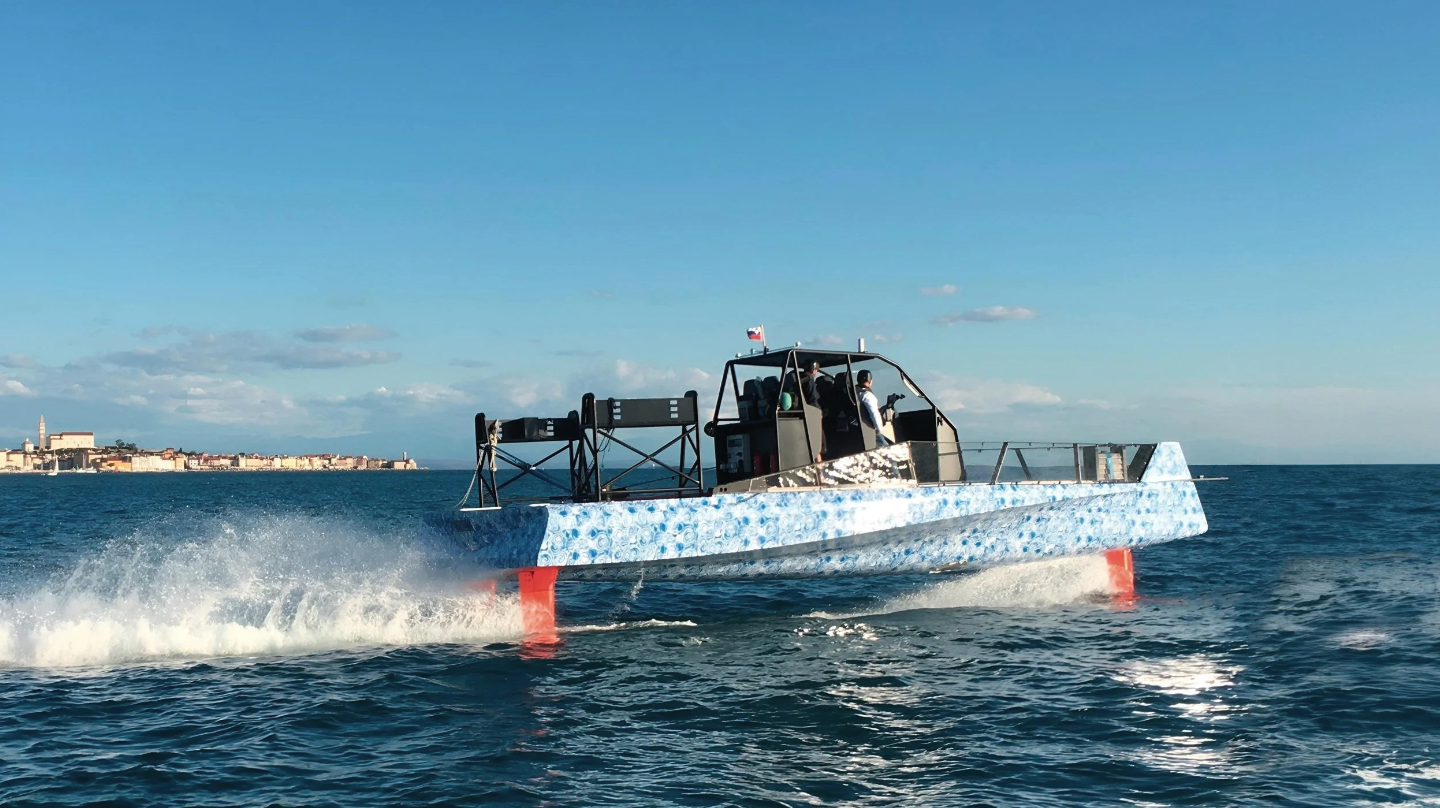
Field testing of boat 1 is very important to define what modifications need to be applied to the series to meet the market in good shape, avoid major design or engineering mishaps, and avoid risk of call-back scenarios or major warranty issues. J&J possesses a set of dedicated measurement instrumentation and a vast experience in testing of boats in all conditions. Many areas are measured and documented: speed and consumption vs RPM and load in different conditions; pitch, yaw and roll analysis; manoeuvre capacity and behaviour; vibration and noise in different areas.
12/
Project Management
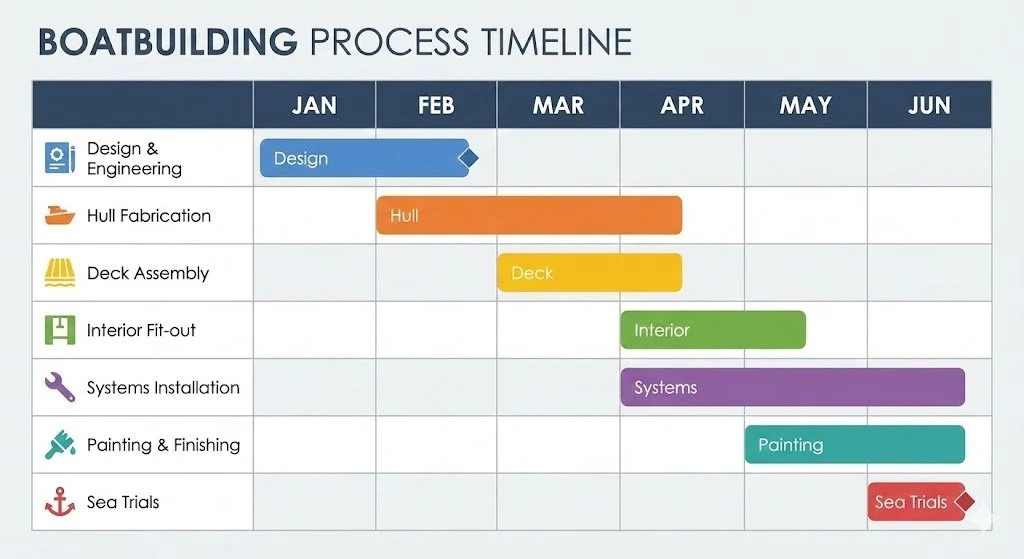
Possibly the most important aspect of a development project is how it is managed. A smooth flow of cooperation and information between the builder's and J&J team is needed to achieve the best results. The respect of timing and cost must be monitored and controlled during the development process. Typically a project manager on J&J's side works with the project manager on the builder's side. This manager starts to share all information with the builder's product launcher at the start of engineering. The launcher — typically coming from the production environment — takes over the project at the end of the engineering phase to finalise development and prepare a smooth launch.
13/
AI Assistance
For over forty years, J&J Design has advanced integrated yacht development — uniting naval architecture, engineering, and tooling under one roof. Today, we extend that legacy through artificial intelligence.
Since late 2022, we've applied AI to structure large datasets and unlock insights from our 400+ yacht projects. This enabled faster access to validated solutions across structure, naval architecture, BOMs, and build costs. AI now supports high-fidelity hydrodynamic surrogate models — delivering rapid, accurate performance predictions and real-time design optimisation.
Our next step is a proprietary, AI-powered development platform. This interactive tool will integrate all design phases, enabling faster development cycles, accurate cost forecasting, and enhanced product quality. At J&J, innovation means refining proven methods, not replacing them.